Showing posts with label Hemp. Show all posts

Friday, September 26, 2008

German minister disses George Bush

[Nairobi, Kenya]
WELL, I came to this cyber cafe to download some web apps like WordPress along with some other goodies. It also gives me a chance to download my emails in Mac Mail. One particular email caught my attention. It's from a ZD Net discussion I'm part of so I followed a link to a related article: Germany uses n-word to describe American policies.


Bush fire...
I give full props to the intelligent German populace who really know how to sniff out a useless politician compared to other countries. No wonder Germany is on the cutting edge in terms of good government and environmental policies. Anyhow, one particular minister was quite blunt about his impression of US president George Bush:
The harsh words from Germany’s Environmental Minister came after a meeting in Europe on reducing CO2 emissions. The American President presented his views there. Here’s some of what the German minister said, “”Bush’s Neanderthal speech…showed not leadership but losership. We are glad that there are also other voices in the United States.”
Shrewd comments...
One viewer really got my attention here. He was sooo on the ball, and I'd like to share his views with you. Take a peek at this:
STOP WHINING!!!
We expect the government to do far too much for us these days. We run around with our hands out looking for breaks and complain about an energy crisis and food shortages and demand the goverment to do somthing and bail us out.

THEY CAN'T HELP.

If you're so hell bent on carbon footprints and global warming turn off your computer right now, sell your car, and city condo, buy a few acres somwhere build a shelter, grow and hunt your own food during summer and try to survive the winter. If you are against big oil stop driving your car get a bike, etc. Change yourself!!!
too many people are too concerned with what other people are doing these days. Do you not have anything better to do with your life than complain about me burning tires, lol, and too many "environmentalist" expect everyone to change, but fail to take the step for themselves. Stop complaining, Unless you're driving an electric car, have solar panels on your roof, etc. thats all you are doing and nobody like whiners.

I do not advocate "environmentalism" it's a crock of S*** considering the biggest names are generally the worst offenders. It's politics and they want you to send them your $$$ so they strike up a cause and push it so you'll buy in. Just another place for the Gov't to claim to have spent your tax dollars... {source}
Hey, no arguments here. What about you? Most of you already know my solution to saving the planet. I'm telling you, this solution is easy to implement, and will empower citizens in a self sufficient manner. What is this so-called solution?

Hemp Farming in Africa: A Billion Dollar Industry?

Wednesday, April 30, 2008

Dependency and Rising Prices

[Nairobi, Kenya]
EVERYWHERE YOU look, read or browse, somebody's talking about bad stuff that keeps rising: Rising fuel/food/fertilizer/cooking oil/electricity prices, looming food shortages, rolling black outs in countries experiencing rapid economic growth, and on and on. "What on earth is going on?" The more I'm reminded about the above headlines, the more I'm convinced that taking a self sufficient approach to home living, along with revisiting our ancient past, will provide a host of answers to these new challenges.

Let's just say that mankind was a lot more self sufficient in previous generations. We knew how to: Farm, create our own clothes, build our own homes, heal ourselves with herbs, and so forth. In a strange way, the more we've "progressed", the less we bloody know how to do ANYTHING of substance.

An era of dependency...
Now, we're "dependent" on big business with all of their "patented solutions" to provide for all our needs. Let's face it folks, we're at the mercy of "corporate capitalists" who don't ever want to see you or I becoming too independent in our daily affairs. A perfect example is mobile telecommunications. Why do we still have proprietary voice networks when all these companies have to do is build their capacity using tried and true open protocols like TCP/IP, which is the backbone communications protocol of the Internet? Why do they charge so much for voice and SMSs when we could do all that through the Internet...if they allowed us to? All governments have to do is lay the wireless infrastructure using taxpayers money, and the price of communications will plummet overnight. "Build it and they will come!"


The irony about "big business" and "free markets" is that no one at the top is playing fair. Everyone talks a good game about open markets, fair competition, and letting the market decide. But in reality, a lot of these massive entities simply cannot handle clean, fair, open competition. Just ask farmers in developing countries why it's almost impossible to export their cheaper produce to Europe or North America. Why are these Western farmers getting huge subsidies to do nothing? Fair competition? Pleezze, they can't handle it! That's why they (Big Oil, Big Pharma, Big Agriculture, Military Industrial Complex, Banking & Insurance) need to "contribute" to political campaigns. It's simply to gain an edge. You think these companies give a shit about democracy? In fact, they prefer to operate in countries that are less democratic because they only have to pay off (oops, I mean earn favour) those at the top.

Questions, solutions to dependency...
Can you believe that oil just recently reached the $120 per barrel plateau for the first time in history? Where's that elusive electric car we've been talking about for a good 3 decades now? Didn't the great Yugoslavian scientist, Nikola Tesla (the father of hydro electric power, alternating current, modern electronics, patent holder to many inventions), invent an elaborate free energy system back in the 1930s or so? Why hasn't anyone used the results from his successful Wardenclyffe Project off Long Island Sound to pursue (ahem!) his dreams of free energy for mankind? Did you know that,
J. P. Morgan, one of the world's first billionaires at the turn of the century, threatened Tesla's potential investors with financial ruin after he realized Tesla wanted to produce free energy?

By the way, I read a fascinating Los Angeles Times article from around the 1930s on the Net. The reporter took a test drive in a car that Tesla modified with a "black box" converter.
This allowed said car to be powered by (gasp!) water for 500km with a top speed of 60 mph. Are you telling me no one else could come up with a similar idea? Oh, what ever happened to the amazing cancer cure that the brilliant scientist Royal Raymond Rife invented via his Rife machine in the 1930s only to be demonized by the American Medical Association and the FDA? You do know that cancer treatment is a multi billion dollar a year industry, right? Can you imagine the panic of the medical "establishment" when they saw Rife's revolutionary microscope that could destroy cancer cells via sound waves? And where's the will power in government to encourage its citizens to be energy self sufficient via hemp, jatropha and other biomass solutions that don't compete with food?

Better yet, why are we still cutting down trees for pulp and paper? Don't they know that 1 acre of hemp, which grows in 90-120 days, can produce the same amount of pulp and paper that can be obtained from 4 acres of trees which take decades to grow? If you don't believe me, I urge you to peek Jack Herer's free online hemp book. He's the world's foremost authority on hemp. Here's some food for thought:

In the Twenties, the early oil barons such as Rockefeller of Standard Oil, Rothschild of Shell, etc., became paranoically aware of the possibilitys of Henry Ford’s vision of cheap methanol fuel, * and they kept oil prices incredibly low – between one dollar and four dollars per barrel (there are 42 gallons in an oil barrel) until 1970 – almost 50 years! Then, once they were finally sure of the lack of competition, the price of oil jumped to almost $60+ per barrel over the next 30 years.

* Henry Ford grew marijuana on his estate after 1937, possibly to prove the cheapness of methanol production at Iron Mountain. He made plastic cars with wheat straw, hemp and sisal. (Popular Mechanics, Dec. 1941, “Pinch Hitters for Defense.”) In 1892, Rudolph Diesel invented the diesel engine, which he intended to fuel “by a variety of fuels, especially vegetable and seed oils.” {source: The Emperor Wears No Clothes by Jack Herer, chapter 9}

CONCLUSION...
The little guy (consumers, SMEs, etc.) in the developing world - especially Africa - need to realize that they are still dependent on big business for a great deal of
their livelihoods. Ideally, this shouldn't be a bad thing. But it is. Why? Because someone's not playing fair (see above).
Furthermore, the questions I posed above require some serious thought. But as Jack Nicholson said to Tom Cruise in A Few Good Men, "YOU CAN'T HANDLE THE TRUTH!"

Monday, April 23, 2007

Cotton: World's Most Toxic Crop

[Nairobi, Kenya]
THEY SAY humans are the most intelligent creatures on the planet. Perhaps so. What's shocking, though, is how the majority of the world's population allow certain toxic industries to flourish. I'm talking about industries that pollute our fragile environment every day -- especially when greener alternatives exist. You need an example? Cotton farming. Hemp could replace this crop while making our world a cleaner, more livable place over night.

I will leave you with this article (see Google cache) below, courtesy of the Washington Free Press, which is a "bi-monthly newspaper from Seattle highlighting labor and environmental issues. Emphasis on local issues, with some national and world-wide news." It's based in the beautiful state of Washington (USA.), which is located in the Pacific NorthWest -- a region with tons of avid green citizens who love the outdoors. Cities such as Portland, Beaverton, Vancouver, Seattle, Olympia and Tacoma are located here. By the way, don't forget to take a peek at an earlier Go Africa go! blog post I wrote last month in Tanzania: Hemp Farming in Africa: A Billion Dollar Industry? After you read it, prepare to be very angry. You'll also realize that Africa could be raking in billions of dollars simply by growing hemp.

Dude, why're you wearing that shirt?

Cotton: World's Most Toxic Crop
by Organic Consumers' Association
Cotton is the most toxic crop on the planet. While only three percent of the world's farming acreage is cotton, these crops are sprayed with up to 25 percent of the world's pesticides and herbicides, including some of the most toxic ones, such as aldicarb. And of course cotton is present in many other consumer products besides garments--food products, tampons, bandages, baby diapers, mattresses, bed linen, etc.

According to
www.sustainablecotton.org, "the simple act of growing and harvesting the one pound of cotton fiber needed to make a T-shirt takes an enormous toll on the air, water, and soil, not to mention the health of people in cotton growing areas. The cotton grown for just one T-shirt requires a third of a pound of agricultural chemicals."

Moreover, some 60 percent of a cotton crop, by weight, enters the food chain in the form of cottonseed oil which is used widely in processed foods, and as cottonseed feed for cows, ending up in meat and dairy products. The pesticide residues from these cottonseeds concentrate in the fatty tissues of these animals, and in turn are passed on in meat and dairy products to consumers.

Genetically engineered (GE) cotton is another problem. Playing on concerns about pesticides, Monsanto has pushed GE cottonseeds onto the market in more than a half-dozen countries as the "green alternative" for cotton growers. In terms of human health hazards, herbicide-resistant GE cotton plants--and their oil and seed derivatives--contain foreign proteins, bacteria, viral promoters, and antibiotic resistant genes--food ingredients that humans have never eaten before. These GE plants and their derivatives are unlabeled and untested for hazards to human health and the environment. Over ten million acres of genetically engineered cotton are now being grown across the US. These cotton plants are gene-spliced so that the cotton plant emits its own pesticide, or else the plant is genetically engineered to be able to survive mega-doses of powerful pesticides.

Biotech cotton is a mortal threat to organic cotton farming, the real "no pesticide" alternative. This threat is two-fold. First of all, it is a source of genetic pollution (like GE corn or canola), spreading its altered DNA. Even worse, it is slowly but steadily building up resistance among cotton pests, creating the preconditions for cotton superpests to arise.

Oh...
Don't forget to post a comment. Tell us what you think.

Wednesday, March 28, 2007

Ghana takes a backwards view on hemp

[Dar es Salaam, Tanzania]
WHEN I was in grade 11, I wrote an essay titled Were the Middle Ages a Backward Period in the Development of Western Civilization - as has Traditionally been Thought of & as the Very Name Implies? That was for my Ancient Greek & Roman History class taught by the brilliant Mr. John Patton who kind of looked like Aristotle. :-) Actually, we were given a sheet with about 20 topics or questions to choose from. In said essay, I vividly remember stating that "trade and commerce - the mark of an advanced civilization - was virtually non-existent." This was simply proof to show that the Middle Ages was a backward era. No arguments there.


Et tu Ghana?
Well, it appears that the power brokers in Ghana's government have decided to take a trip to the Twilight Zone of backwardness. Just take a peek at this folks:
For the sake of our indigenous Africans in Ghana and throughout the continent, who haven’t been exposed to countless literature and medical journals that herald the Hemp plant, I will quote a passage that clearly states the truth that your politicians and lawmakers conceal, as to the real reason why so much energy is wasted criminalizing this God-given plant.

“The reason the Weed is outlawed is only ostensibly about health. The truth is the Weed is no more addictive and no more a health risk than cigarettes or alcohol, both of which are protected by the law. Why is it then not allowed? Because if it were grown, half the cotton growers, nylon and rayon manufacturers, and timber products people in the world would go out of business. Hemp happens to be one of the most useful, strongest, toughest, longest lasting materials on the planet. You cannot produce better fiber for clothes, a stronger substance for ropes, an easier-to-grow-and-harvest source for pulp. Instead we cut down hundreds of thousands of trees per year to give ourselves Sunday papers, so that we can read about the decimation of the world’s forest. Hemp could provide us with millions of Sunday papers without cutting down one tree. Indeed, it could substitute for so many resource materials, at one-tenth the cost. And that is the catch. Somebody loses money if this miraculous
plant, which also has extraordinary medicinal properties, incidentally is allowed to be grown. That is why marijuana is illegal in your country.”
{source}
By the way, we'll have to assume Ghana's politicians have viable alternatives to creating wealth for its poor farmers that would rival hemp's unlimited possibilities. Right? I doubt it. Now why do I get this sneaking suspicion that some powerful outside institutions have the hands of this government tied behind closed doors. After all, doesn't Ghana depend on aid and favourable trade benefits from some Western governments in order to progress? Hmm...I wonder who sold out. [Read more]

South African government speech on hemp

[Dar es Salaam, Tanzania]
GOD bless South Africa. Now there's a country with leaders who are forward-thinking when it comes to legalizing industrial hemp. It's obvious that they see billions (in dollar$) of reasons to grow said plant. I urge you to take a peek at this amazing speech. Here's a teaser to whet your appetite:
Tonight, we are here to celebrate the first retail and marketing outlet to be established by Hooked on Hemp SA, a black owned small business which acts as convenors of the Human Resource Development programme in the National Hemp Initiative. Ultimately, it is hoped to roll House of Hemp out to the Eastern Cape, Western Cape and KwaZulu-Natal, the three provinces where hemp grows the best in South Africa.

The products you will see this evening at the House of Hemp will surprise you in their diversity, ranging as they do from men's and ladies' fashion wear through to home d飯r, stationery, building materials and beauty and health products. All manufactured from hemp, they are produced for House of Hemp by small scale entrepreneurs from previously disadvantaged communities, with the assistance and support of the CSIR.
{source}
Go South Africa go! [Read more]

Legal hemp for Malawi?

[Dar es Salaam, Tanzania]
THIS is an old article but it's still relevant today as many African governments grapple with the issue of permitting hemp to be grown for it's many industrial uses. I think this is part of the problem:
Only S. Africa and a couple of other more independent African nations have any type of hemp production. The main reason for this is the policy of the United States
which demands, along with many other strings and conditions, a total ban on hemp
production before giving 'aid', massive bribes to officials, or millions of dollars worth of military equipment to brutally put down popular uprisings.
Quite frankly, the choice of raking in billion$ of dollar$ in legitimate foreign exchange is a no brainer to me. What about you? [Read more]

Thursday, March 8, 2007

Hemp Farming in Africa: A Billion Dollar Industry?

[Dar es Salaam, Tanzania]
ARE you kidding me? A billion dollars? Read for yourself...courtesy of Jack Herer, hemp expert extraordinaire:

February 1938: Popular Mechanics Magazine:


"NEW BILLION-DOLLAR CROP"


February 1928: Mechanical Engineering Magazine:


"THE MOST PROFITABLE & DESIRABLE CROP THAT CAN BE GROWN"

Well, if you've been sleeping in a cave for a good half century, you'd probably never realize that mankind has been blessed with a plant of magnificent (almost magical) proportions. A plant that can do almost everything (food, medicine, skin care, building materials, clothing, industrial composites, natural herbicide/fertilizer, and tons more cool stuff) except fix your kitchen sink and babysit the kids.

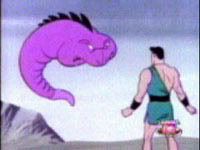
In a sense, hemp is like the Chameleon Creature in the The Mighty Hercules cartoon series, which I used to watch religiously during breakfast time before heading off to public school in Ottawa, Canada. Oh alright, I watched it a bit in high school too. Boy, the Chameleon was an amazing foe. He could instantly change into a bird, another person, a snake, a tree, a giant blob monster - anything - in order to evade capture or to battle Hercules. I always dreamt of having such "chameleonic" powers. Oh well, dreams like that only materialize in movies on the idiot box (TV), eh?

$how me the money
So, how good is hemp as a potential income earner for farmers here in Africa? Well, take a peek on Jack's thoughts:

"As you will see in these articles, the newly mechanized cannabis hemp industry was in its infancy, but well on its way to making cannabis America's largest agricultural crop. And in light of subsequent developments (e.g. biomass energy technology, building materials, etc.), we now know that hemp is the world's most important ecological resource and therefore, potentially our planet's single largest industry.

The Popular Mechanics article was the very first time in American history that the term "billion-dollar"* was ever applied to any U.S. agricultural crop!

*Equivalent to $40-$80 billion now.

Experts today conservatively estimate that, once fully restored in America, hemp industries will generate $500 billion to a trillion dollars per year, and will save the planet and civilization from fossil fuels and their derivatives - and from deforestation!

If Harry Anslinger, DuPont, Hearst and their paid-for (know it or not, then as now) politicians had not outlawed hemp - under the pretext of marijuana (see Chapter 4, "Last Days of Legal Cannabis") - and suppressed hemp knowledge from our schools, researchers and even scientists, the glowing predictions in these articles would already have come true by now - and more benefits than anyone could then envision - as new technologies and uses continue to develop." {source}

My Thoughts
Okay, all I want to say is that I sincerely hope government leaders here in Africa are much more sensible (and less corrupt) than their counterparts in the USA who have made hemp illegal to grow for purely political reasons. Heck, they've even passed these ridiculous policies on to other naive nations trying to earn favours (usually access to US markets, or financial aid). This is in order to protect some very big and powerful corporations (Archer Daniels Midland, Dupont, the entire pharmaceutical industry, the toxic cotton industry, among others) as billions of dollars in profits and shareholder equity are at stake. You don't believe me? Well take a peek at this:

"A further crisis for Hemp arose in America during the 1930's due to propaganda created from companies with vested interest from the new petroleum based synthetic textile companies and the large and powerful newspaper / lumber barons who saw Hemp as the biggest threat to their businesses. Traditionally, Hemp was processed by hand which was very labour intensive and costly, not lending itself towards modern commercial production. In 1917 American George W. Schlichten patented a new machine for separating the fibre from the internal woody core ('Hurds') reducing labour costs by a factor of 100 and increasing fibre yield by a factor of 60. Mr Schlichten and his machines disappeared, not surprisingly!" {source}
Well, thank goodness there are countries such as Canada, France, Russia, Norway, Holland, China and many others whose governments are led by individuals with a different political agenda. If you look at that list, you'll also notice that said nations were not "suckered" into sending their troops to Iraq with all of that faulty (and expensive) so-called intelligence. So it appears that there is some sanity in this world after all. :-) But I'll leave it to Uncle Nick to show you how much insanity exists right before our very eyes. Once again, here's further proof of the hypocrisy of the US government when hemp enters the scene:

"During the Second World War the supplies of Hemp from the East were being cut off so American farmers were encouraged to grow Hemp for military use (webbing, canvas etc.) under the banner of "Hemp For Victory". After the war, licences were subsequently revoked, at a similar time to the last Hemp crops being grown in the U.K." {source}

In closing, I suggest that farmers here in Africa should seriously consider the possibility of growing hemp. Period. This would create excellent opportunities to use it domestically while also earning valuable foreign exchange since it has, literally, thousands of industrial uses. You see, the plant is like a damn chameleon. :-)

Oh, I know who hemp reminds me of: Michael Jordan. Besides, his great high-flying offensive basketball skills, MJ will probably go down as the greatest defensive player ever. He used to shut down the best players from the opposing team night in, night out. In addition, he was a great passer, shooter, ball handler and rebounder. He simply did it all - just like hemp. :-)

By the way, don't forget the numerous jobs that would be created to support the hemp industry along with the knowledge that the environment is getting a big friendly boost. One other thing. It's no secret that certain agricultural products (cotton, sugar, etc.) are not bringing in the profit margins for farmers that was guaranteed in the past.
"According to the government's Annual Vulnerability Monitoring Report 2005, cotton prices have fallen steadily over the past few years as a result of international competition and last year's price for cotton was about 33 percent lower than the previous year. A similar fate has befallen the sugar industry. The European Union plans to slash its price to suppliers in African, Caribbean and Pacific Least Developing Countries by 37 percent from the start of 2007 to bring it in line with the global price, causing the profits of Swazi producers to shrink significantly." {source}
Now, according to Lufto Dlamini (Swazi Minister for Enterprise and Employment), "in hemp we have an alternative to cotton, which has let us down badly over the last few years." {source} This is yet more food for thought, and a sign that some government leaders in Africa are starting to see hemp's true potential. Right now, this is probably one of the best win-win business opportunities on the planet and, perhaps, in the history of the world.

Go hemp go! :-)

-----------------------
Related links: